
Table of Contents
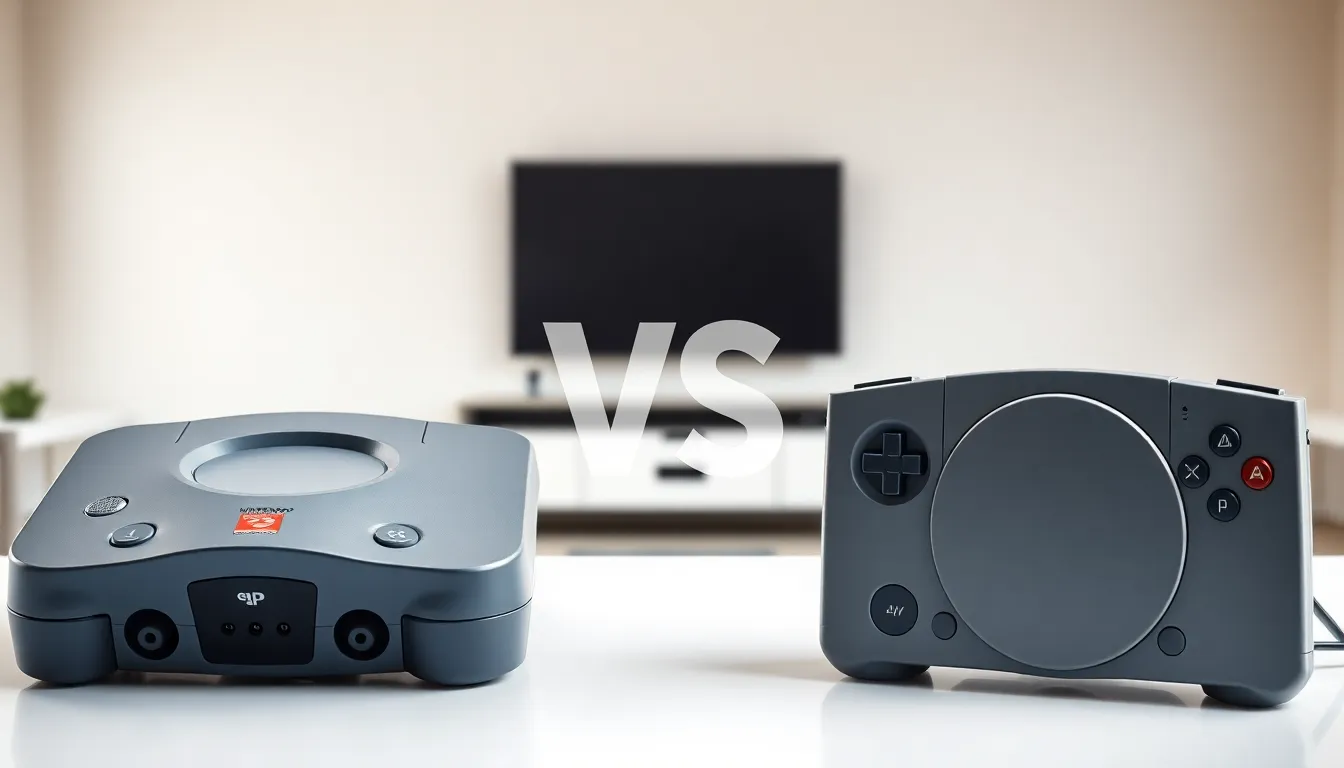
ToggleThe Nintendo 64 vs PlayStation debate shaped an entire generation of gamers. Both consoles launched in the mid-1990s and defined what 3D gaming could become. Nintendo released the N64 in 1996, while Sony’s PlayStation hit North American shelves in 1995. Each system brought unique strengths to the table. The N64 offered cartridge-based gaming and four controller ports out of the box. The PlayStation used CD-ROMs and attracted third-party developers with its lower production costs. Millions of players chose sides, and that rivalry still sparks conversations today. This comparison breaks down hardware specs, game libraries, controller designs, graphics capabilities, and lasting influence to help settle the Nintendo 64 vs PlayStation question once and for all.
Key Takeaways
- The Nintendo 64 vs PlayStation debate centers on cartridge-based instant loading versus CD-ROM storage that allowed more content and cheaper game production.
- PlayStation dominated sales with 102 million units compared to the N64’s 32.9 million, largely due to stronger third-party support and a library of over 7,900 games.
- Nintendo 64 exclusives like Super Mario 64 and Ocarina of Time set standards for 3D game design that still influence developers today.
- The N64 offered built-in four-player support, while PlayStation required a multitap adapter but eventually introduced the DualShock controller that became the template for modern gamepad design.
- Both consoles shaped the gaming industry—Nintendo pioneered analog stick controls and quality-focused exclusives, while Sony established disc-based media and mature gaming as industry standards.
Hardware and Technical Specifications
The Nintendo 64 vs PlayStation hardware debate starts with raw processing power. The N64 featured a 64-bit MIPS R4300i CPU running at 93.75 MHz. Sony’s PlayStation used a 32-bit MIPS R3000A processor clocked at 33.8 MHz. On paper, Nintendo’s console looked more powerful.
But specs don’t tell the whole story. The PlayStation included 2 MB of RAM plus 1 MB of video RAM. The N64 packed 4 MB of unified RAM, expandable to 8 MB with the Expansion Pak. This extra memory let N64 games render more detailed environments in certain titles.
The real hardware difference came down to media format. Nintendo stuck with cartridges that maxed out at 64 MB. Sony chose CD-ROMs that held up to 700 MB of data. This decision affected everything from game development costs to load times.
Cartridges loaded games almost instantly. PlayStation owners sat through loading screens. But developers could fit more content, voice acting, and pre-rendered cutscenes on CDs. The Nintendo 64 vs PlayStation hardware choice shaped each console’s entire game library.
Game Libraries and Exclusive Titles
Game libraries represent the biggest difference in any Nintendo 64 vs PlayStation comparison. The PlayStation launched with over 7,900 games across its lifespan. The N64 received roughly 388 titles. Quantity favored Sony by a landslide.
Quality arguments get more interesting. Nintendo delivered some of gaming’s most celebrated exclusives. Super Mario 64 redefined 3D platforming. The Legend of Zelda: Ocarina of Time consistently ranks among the greatest games ever made. GoldenEye 007 brought first-person shooters to consoles in a meaningful way.
The PlayStation countered with its own heavy hitters. Final Fantasy VII became a cultural phenomenon. Metal Gear Solid pioneered cinematic storytelling in games. Resident Evil established survival horror as a genre. Crash Bandicoot and Spyro the Dragon gave Sony mascot characters to rival Mario.
Third-party support tilted heavily toward PlayStation. Square, Konami, and Capcom produced most of their flagship titles for Sony’s console. The CD format made game production cheaper, so more developers took risks on the PlayStation.
The Nintendo 64 vs PlayStation library debate comes down to preference. Nintendo offered fewer games but maintained higher quality control. PlayStation provided variety and third-party innovation.
Controller Design and Gameplay Experience
The Nintendo 64 vs PlayStation controller battle introduced innovations that changed gaming forever. Nintendo’s three-pronged controller looked strange but served a purpose. The analog stick sat in the center prong, giving players precise 3D movement control. The Z-trigger on the back introduced what became standard trigger button placement.
Sony’s original PlayStation controller launched without analog sticks. The DualShock update in 1997 added dual analog sticks and rumble feedback. This design became the template for modern controllers. Every console controller since borrows from the DualShock layout.
Multiplayer experiences differed significantly between systems. The N64 included four controller ports built into the console. Friends could jump into Mario Kart 64 or Super Smash Bros. without buying extra accessories. PlayStation required a multitap adapter for more than two players.
The N64 controller’s C-buttons handled camera control in many games. They worked well enough, but the single analog stick limited options. PlayStation’s dual analog setup eventually proved more versatile for 3D games.
Both controllers shaped how people played games in the 1990s. The Nintendo 64 vs PlayStation input methods influenced every console generation that followed.
Graphics and Media Formats
Graphics comparisons in the Nintendo 64 vs PlayStation matchup require context. The N64 produced smoother textures thanks to anti-aliasing and texture filtering. PlayStation games often showed more pixelated textures and visible polygon edges.
But PlayStation games could include full-motion video sequences. CD storage let developers add pre-rendered cinematics that looked stunning for the era. Final Fantasy VII’s cutscenes amazed players in 1997. N64 cartridges couldn’t hold that kind of content.
The N64’s graphics hardware handled certain effects better. Games like Wave Race 64 showed impressive water reflections. Banjo-Kazooie displayed colorful, detailed worlds. The Expansion Pak boosted resolution in compatible games like Perfect Dark and Donkey Kong 64.
PlayStation games compensated with art direction and creative design. Castlevania: Symphony of the Night used 2D sprites brilliantly. Silent Hill created atmosphere through fog effects that also masked hardware limitations.
Audio quality favored the PlayStation. CD audio meant orchestral soundtracks and voice acting throughout entire games. N64 games used compressed audio that sounded noticeably thinner.
The Nintendo 64 vs PlayStation graphics debate has no clear winner. Each console excelled in different areas based on its media format and hardware design.
Legacy and Long-Term Impact
The Nintendo 64 vs PlayStation rivalry shaped modern gaming in lasting ways. Sony won the sales battle decisively. The PlayStation sold over 102 million units worldwide. The N64 moved about 32.9 million consoles. Market share shifted dramatically toward Sony during this generation.
Nintendo’s influence extended beyond sales numbers. Super Mario 64 established the blueprint for 3D platformers. Ocarina of Time’s lock-on targeting system appears in action games today. The analog stick became standard on all controllers after the N64 proved its value.
PlayStation established Sony as a gaming powerhouse. The brand continued through PlayStation 2, 3, 4, and 5. Sony’s approach to third-party relationships and disc-based media became industry standard. The PlayStation also helped legitimize gaming as adult entertainment rather than just kids’ toys.
Both consoles maintain strong collector and retro gaming communities. N64 games command high prices on secondary markets. PlayStation titles get re-released through digital storefronts. Speedrunning communities keep classic games from both systems alive.
The Nintendo 64 vs PlayStation competition pushed both companies to innovate. Gamers benefited from that rivalry through better games, more advanced hardware, and creative risks neither company might have taken alone.


