

The Nintendo 64, a console that turned living rooms into epic battlegrounds and racing circuits, holds a special place in gaming history. Launched in 1996, it introduced players to a world of 3D adventures, where jumping on mushrooms and racing colorful characters became the norm. With its iconic controller resembling a futuristic spaceship, it was a game-changer—literally.
From the unforgettable adventures of Mario to the intense battles of GoldenEye, the N64 shaped a generation’s gaming experience. It’s not just a console; it’s a time machine that transports players back to a simpler era when multiplayer meant gathering friends around a single screen and arguing over who got to be Player One. Join the journey through the highs, lows, and quirky moments that made the Nintendo 64 a beloved classic. Get ready to relive the nostalgia and discover why this console still reigns supreme in the hearts of gamers everywhere.
Overview of Nintendo 64 Gaming History
Launched in 1996, the Nintendo 64 marked a pivotal moment in gaming history. This console introduced players to immersive 3D environments, transforming gameplay experiences. Developers embraced the power of the system, leading to memorable titles that would shape the industry.
Significantly, iconic games such as Super Mario 64 showcased innovative mechanics and open-world exploration. Multiplayer experiences also thrived, with GoldenEye 007 setting a standard for first-person shooters. Friends clustered around screens, sharing laughter and competition.
Besides its groundbreaking titles, the Nintendo 64 featured a unique controller design. The trident shape offered diverse control options, appealing to different gaming styles. Users found this controller comfortable for various genres, from platformers to racing games.
The console’s cartridge format contributed to faster load times compared to disc-based systems. However, the format limited storage capacity, affecting game size. Despite this, developers created optimized content that maximized the hardware’s potential.
During its lifespan, Nintendo 64 sold over 32 million units worldwide. This success solidified its place in gaming culture, alongside competitors like the PlayStation. Nostalgia for the console endures today, with many fans cherishing their experiences.
The Nintendo 64 left a lasting impact on gaming. Its innovation in 3D gaming, memorable titles, and unique controller design continue to influence modern gaming. Engaging gameplay experiences ensured the legacy of this classic console remains strong.
The Birth of Nintendo 64
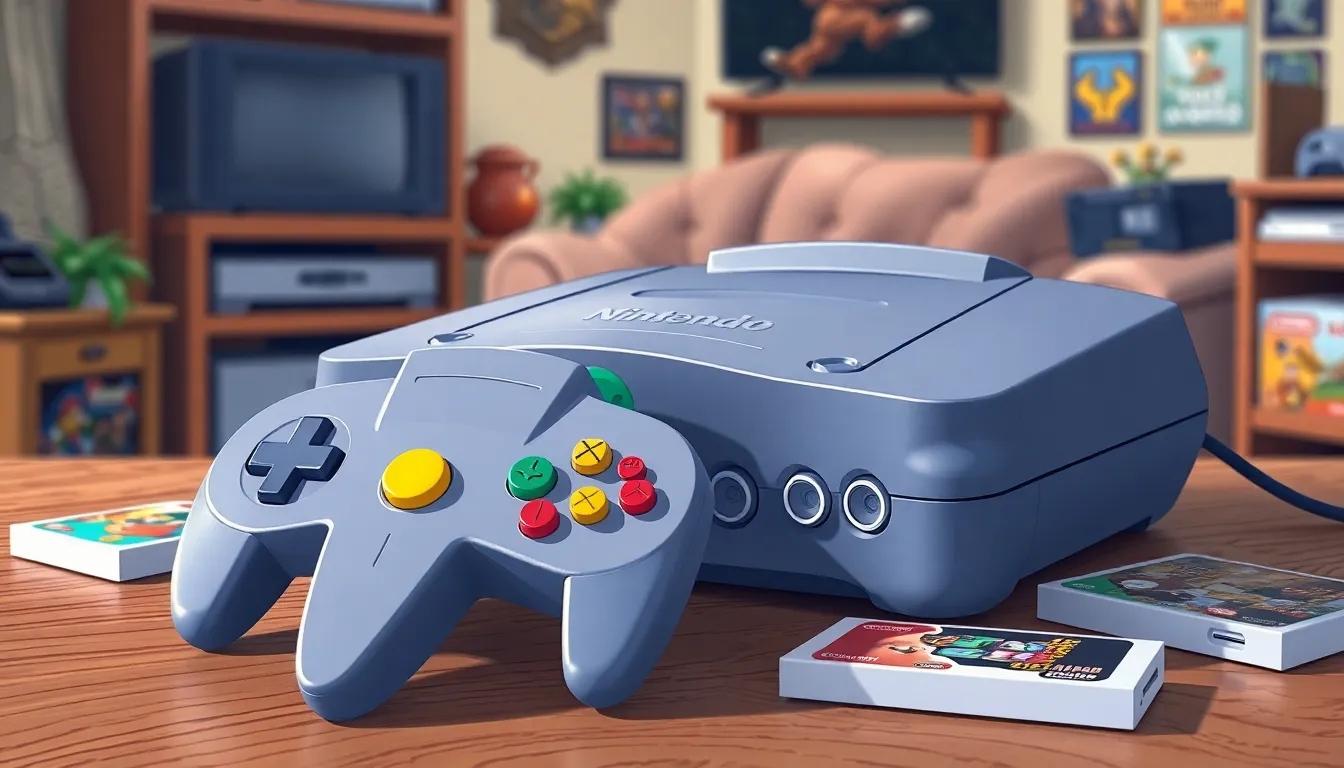
In 1996, the Nintendo 64 launched, marking a pivotal moment in gaming history. The development of this console took place during a time of rapid technological advancement.
Development Process
Nintendo began creating the Nintendo 64 as a response to the growing demand for 3D gaming. Engineers and designers aimed to push the boundaries of video game graphics. Collaboration with Silicon Graphics brought advanced 3D rendering capabilities. Initial plans involved a CD-ROM format but transitioned to cartridges for faster load times. Development was extensive and took several years, resulting in a final product that balanced performance and game design. Quality control and extensive testing preceded the console’s release, ensuring gamers received a reliable, high-quality experience.
Key Innovations
The Nintendo 64 introduced several key innovations that set it apart from competitors. Its unique trident-shaped controller featured an analog stick, allowing for precise control over 3D movements. Multiplayer functionality became a significant selling point with four controller ports enabling shared gameplay experiences. The console’s cartridge format, while providing limited storage, minimized load times, enriching gameplay. Additionally, the system supported 64-bit graphics, facilitating stunning visual fidelity for the era. These innovations shaped not only the Nintendo 64 but also influenced future gaming designs and experiences.
Major Releases and Titles
The Nintendo 64 introduced several groundbreaking titles that defined its legacy. These games showcased innovative gameplay mechanics and immense creativity.
Iconic Games
Super Mario 64 set a new standard for platformers, allowing players to explore 3D environments. The game emphasized freedom of movement and introduced mechanics like collecting Power Stars. GoldenEye 007 revolutionized first-person shooters, popularizing split-screen multiplayer. Players thrived in competitive settings, making it a staple at social gatherings. The Legend of Zelda: Ocarina of Time blended storytelling with immersive exploration, earning multiple Game of the Year awards. Other notable titles included Mario Kart 64 and Star Fox 64, contributing to the console’s diverse library and engaging gameplay experiences.
Expansion Pack Enhancements
The Expansion Pack enhanced specific titles, unlocking additional content and improved graphics. Players used it with games like The Legend of Zelda: Ocarina of Time and Perfect Dark, facilitating higher resolution textures. Released in 1999, the Expansion Pack provided an opportunity for developers to push the boundaries of gaming visuals and complexity. Gamers appreciated the deeper experiences and richer gameplay these enhancements offered. This accessory reinforced the Nintendo 64’s reputation for innovation and adaptability in a competitive market. The introduction of the Expansion Pack exemplified Nintendo’s commitment to extending the console’s life cycle while still appealing to its audience.
Cultural Impact of Nintendo 64
The Nintendo 64 significantly shaped gaming culture during and after its launch. It introduced 3D gameplay and multiplayer experiences that thrilled players.
Influence on Gaming Culture
Multiplayer functionality defined social gaming in the late ’90s. Friends gathered around the Nintendo 64, engaging in spirited competitions in games like GoldenEye 007 and Mario Kart 64. This console popularized the use of split-screen mechanics, fostering camaraderie and shared experiences. Iconic characters from franchises initiated a sense of familiarity and connection among gamers. Events and tournaments centered around Nintendo 64 games solidified its status in the competitive gaming scene. Culturally, the Nintendo 64 influenced merchandise, fan art, and conventions, showcasing its lasting relevance.
Legacy in Modern Gaming
Modern gaming still reflects the innovations of the Nintendo 64. Precise control from the analog stick established a standard that continues in today’s controllers. 3D platforms introduced by Super Mario 64 inspired countless subsequent titles. First-person shooters evolved due to the unique gameplay mechanics found in GoldenEye 007. Developers often reference Nintendo 64’s groundbreaking titles when creating new games, ensuring that its legacy persists. Overall, the spirit of creativity and community fostered by the console remains evident in today’s gaming landscape.
Technical Features and Specifications
The Nintendo 64 introduced groundbreaking technology that set it apart from competitors.
Hardware Innovations
Innovative hardware defined the Nintendo 64 experience. Its 64-bit NEC R4300i CPU delivered increased processing power, supporting a range of complex graphics and physics. An advanced Reality Coprocessor, developed by SGI, enabled superior 3D rendering. The console’s cartridge format, while limited in storage, facilitated rapid loading times, enhancing gameplay fluidity. Four controller ports catered to multiplayer scenarios, making it easy for multiple players to join. The inclusion of an analog stick represented a major leap forward, offering precision control that reshaped gameplay. An Expansion Pak, released in 1999, provided a way to enhance graphics and memory capabilities for select titles, demonstrating adaptability in design.
Game Design and Graphics
Game design on the Nintendo 64 benefited from its technical specifications. Iconic titles showcased the console’s ability to create immersive environments with 3D graphics. Super Mario 64 pioneered open-world exploration, allowing players to navigate vast landscapes. Games like The Legend of Zelda: Ocarina of Time combined storytelling and strategic gameplay with vibrant visuals. It utilized advancements in texture mapping to create detailed character models and environments. Developers emphasized multiplayer experiences, as seen in GoldenEye 007, where split-screen functionality became standard. Graphics innovations, bolstered by the hardware, provided a visually stunning gaming experience that captivated players and set new industry standards.
The Nintendo 64 stands as a pivotal chapter in gaming history. Its unique innovations and unforgettable titles have left an indelible mark on the industry. From the revolutionary 3D gameplay of Super Mario 64 to the multiplayer excitement of GoldenEye 007, it shaped the way players interact with games.
The console’s ability to foster community through multiplayer experiences created lasting memories for countless gamers. Today, its influence is still felt in the design of modern gaming systems and the development of new titles. The Nintendo 64’s legacy continues to inspire and connect generations of players, ensuring its place in the hearts of gaming enthusiasts everywhere.